Outdoor living ideas for 2026, from small garden layouts and furniture to lighting and all-weather design, with budget and planning advice for UK homes.
Last Updated: November 21, 2026
Quick Summary
Outdoor living space design in 2026 centres on comfortable, layered gardens used all year, with indoor-outdoor flow, multifunctional zones, natural materials and warm lighting. Plan the use first, then choose materials and pieces that support it.
Measure the space and map sun and shade before buying anything.
Decide the main use and a secondary use, and design around those two.
Set a budget range for each zone and leave a contingency for lighting and drainage.
Check drainage and planning permission early, since these mistakes are the most expensive to fix.
Spend on structure and drainage, and save on cushions and rugs that are easy to swap.
Outdoor living is no longer a summer extra. Across the UK, more homeowners are treating the garden as a room they use all year, with seating, shelter, light and warmth built in from the start. The 2026 look is comfortable, layered and connected to the house.
Most trend roundups show the same themes: adaptable layouts, a smooth link between indoors and out, soft textures, and warm lighting. These ideas matter because they change how you plan. Start with how you want to use the space, then choose the materials and pieces that support it.
Indoor-outdoor flow: Doors, sightlines and paving that run from the kitchen to the patio
Multifunctional zones: One area for dining, another for lounging, a third for planting
Natural materials: Timber, rattan, stone and soft fabrics in grey, beige and muted greens
Layered lighting: Low, warm light that makes evenings feel like a room
Wellbeing features: Quiet corners, shade, and in some gardens a sauna or hot tub
Watch out: trends fade quickly. Choose pieces you will still want in five years, and keep bold colours to cushions or rugs that are easy to swap.
Planning Your Outdoor Living Space Step by Step
Good outdoor design starts with a plan, not a shopping basket. Work through these steps before you buy anything, and keep a notebook or spreadsheet so you can compare quotes and sizes later.
Measure the space properly. Note the length, width, any slopes, walls, fences and existing trees. Measure door widths and the route from the kitchen to the patio, so you know how furniture and people will move through the space.
Map the sun and shade. Watch the garden at different times of day and note where afternoon sun falls. Patios that get sun from midday to late afternoon suit dining, while shady corners suit lounging. Wind and rain exposure matter as much as aspect when choosing where to sit.
Decide the main use and the secondary use. Entertaining, relaxing, cooking and family play each need a different layout. Write down the top two uses and design around them; trying to fit five uses into a small plot usually means none of them works well.
Set a budget range for each zone. Split the budget into seating, shelter, lighting, flooring and planting. Costs vary with materials, size and installation, so get itemised quotes for each element. Leave a contingency for lighting, fixings, drainage and unexpected work.
Sketch the zones to scale. Draw rough boundaries for seating, dining and planting on graph paper or in a free planning app. Mark doors, drains, manholes and any services you must keep clear.
Check access and regulations early. Keep clear paths to the house, bins and any gate. Before you build, check whether you need planning permission with your local planning authority, as the rules depend on the structure, its height, its position relative to boundaries and whether the property is in a conservation area. For electrical work outdoors, use a competent electrician and ensure circuits are protected by an RCD; for gas heaters and fire features, follow the manufacturer's clearances and never store gas cylinders indoors. If you are unsure, ask your local planning authority before you order materials.
Plan drainage and levels. Slope paving away from the house so that water runs to a drain or a permeable area rather than pooling against the wall. Check whether your planned surface is permeable or connects to a soakaway, because non-permeable paving above certain areas may need approval (Permeable surfacing of front gardens: guidance).
Phase the build. Start with the hard landscaping and shelter, then add furniture, lighting and planting over the following seasons. This spreads the cost and lets you test how you actually use the space before committing more budget.
Planning the layout first can help avoid buying pieces that do not fit the space, and it is sensible to spend more on structure and drainage, where mistakes are expensive to fix.
Watch out: skipping the drainage and regulation checks is the most expensive mistake in outdoor planning. Fixing a patio that slopes towards the house, or removing a structure that needed permission, costs far more than getting it right at the sketch stage.
Small Garden Design Ideas That Feel Like an Extra Room
A small garden can feel like a room if you define its edges. Use a rug, a pergola or a change in paving to mark the seating area, and keep the rest open. Light colours and mirrors on a fence can make the space feel larger.
Choose one main seating set rather than several small pieces
Use a slim dining table that folds away when not needed
Add vertical planting on walls to save floor space
Pick a covered structure, such as an aluminium veranda, to create shelter from rain
A covered veranda is one of the most effective ways to turn a small patio into a usable room. You can explore options on our Deponti Bosco Aluminium Veranda page.
Outdoor Furniture Ideas for Comfort and Durability
Comfort and durability matter more outdoors than indoors. Look for weather-resistant frames, quick-drying cushions and materials that handle British rain without fading quickly. Good outdoor furniture should also suit the size of your space, so measure before you buy.
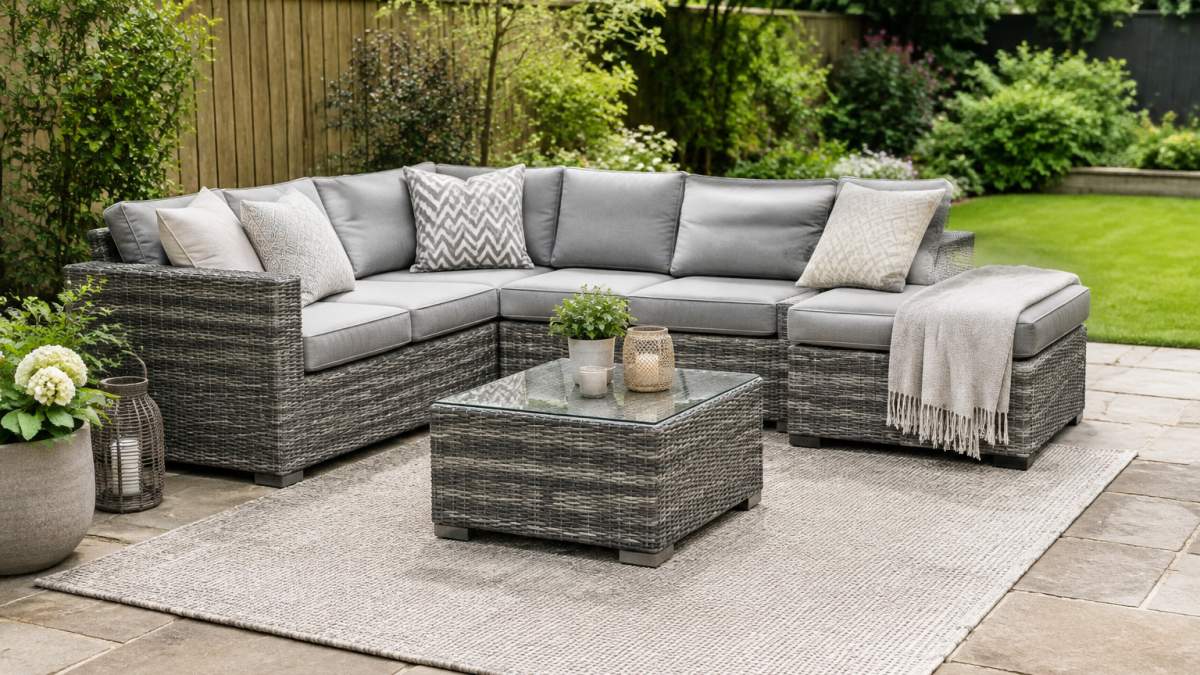
Grey rattan lounge set with soft cushions on a paved patio beside a garden with an outdoor rug
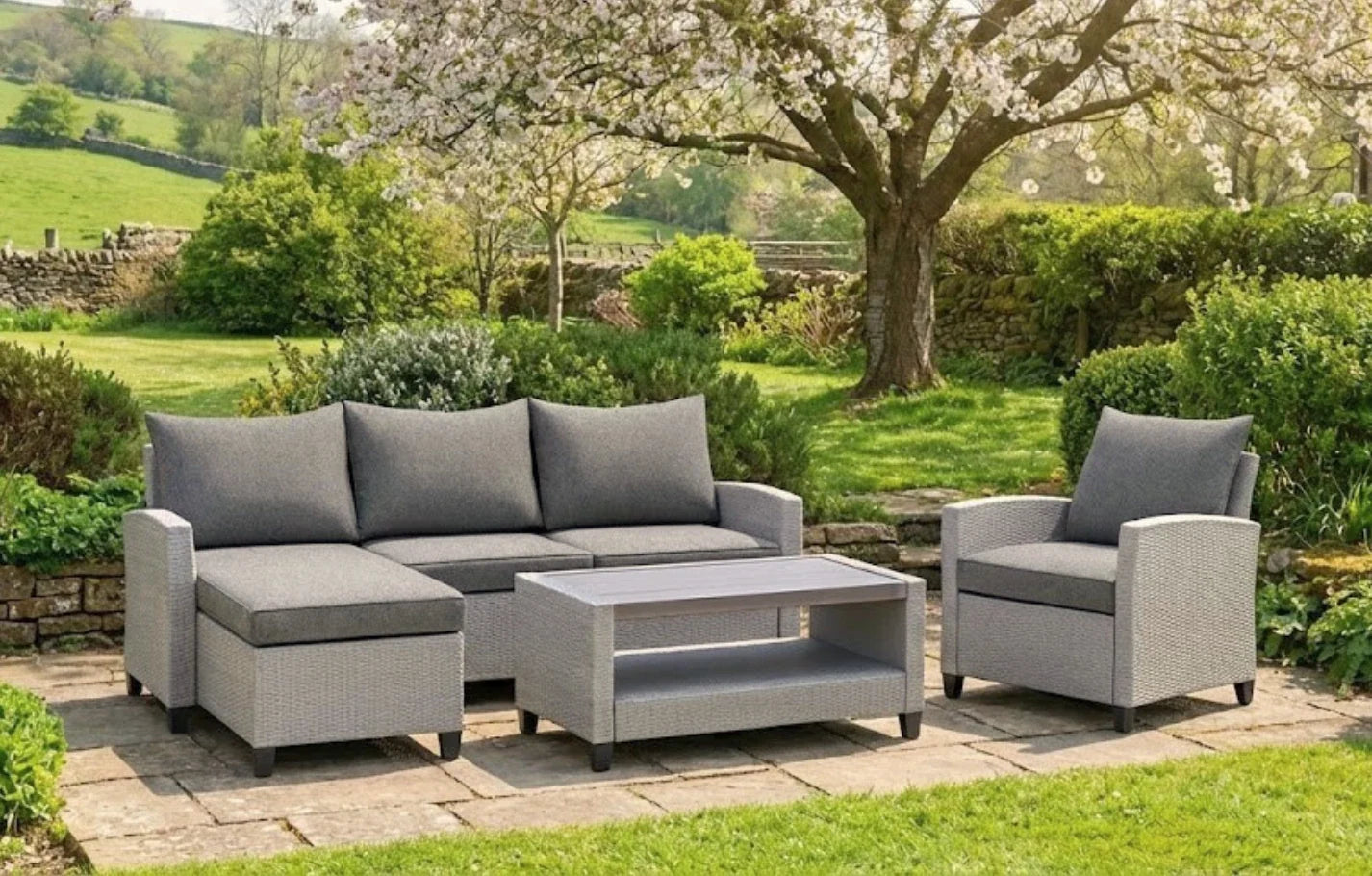
Rattan-style sets are popular because they are light to move and comfortable for long evenings. The Stockholm Rattan Grey 4 Seater Garden Chaise Lounge & Armchair Set at £399.00 is a compact set with removable, washable, weather-resistant cushion covers, and it includes a minimum three-year guarantee and free standard UK delivery. Covers can help protect outdoor furniture, so keep them on during wet months.
Stockholm Rattan Grey 4 Seater Garden Chaise Lounge & Armchair Set
Browse our full garden furniture range to compare seating, tables and sets for different spaces.
Garden Lighting Ideas for Evenings Outdoors
Lighting turns a garden into a place you want to be after dark. Use low, warm light along paths and steps for safety, and add softer lamps or string lights above the seating area for atmosphere.
Solar lights along borders need no wiring and are easy to fit
Uplighting on a tree or wall adds depth without glare
A warm-white bulb makes the space feel more relaxed than cool white
All-Weather Garden Design, Drainage and Maintenance
British weather means your garden needs to cope with rain as well as sun. Good drainage stops patios from pooling and keeps furniture from sitting in water. Slope paving slightly away from the house, and leave small gaps between slabs so water can drain.
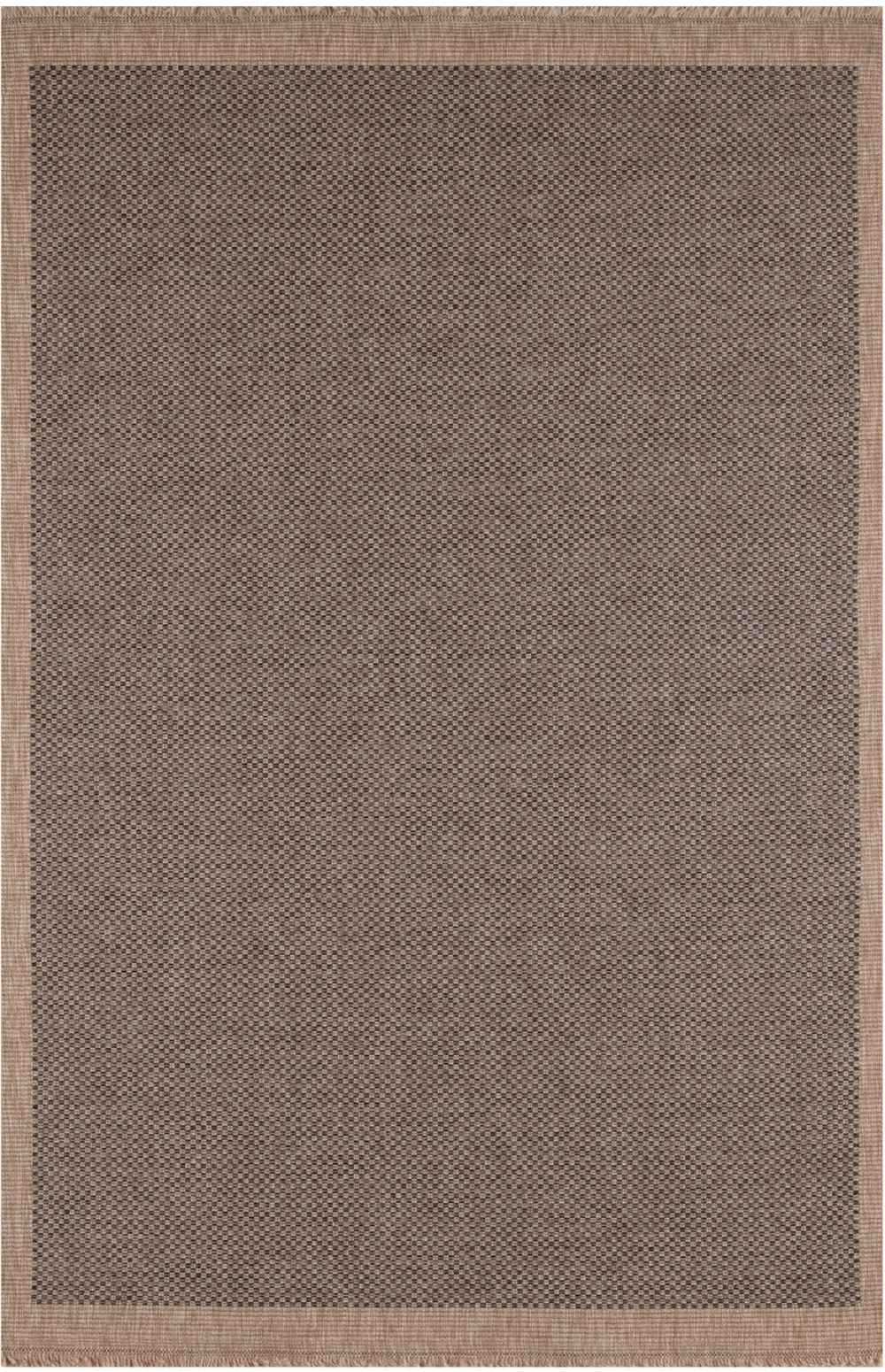
Outdoor rugs add comfort and texture, but they must handle wet conditions. Look for rugs made from polypropylene with UV and moisture resistance. The Ecology Outdoor Rug Beige at £24.90 is quick-drying and easy to clean, which suits a busy patio. You can see the full outdoor rug options here.
Ecology Outdoor Rug Beige | 100b
Nature Outdoor Rug Dark Grey | 5200DG
Maintenance tips to remember:
Wipe furniture down monthly with a damp cloth
Store cushions indoors during long wet spells
Clear gutters and drains each autumn
Check fixings and frames after strong winds
Budgeting and Your Next Step for Your Outdoor Living Space
Costs vary widely, so set a range for each part of the project and price the big-ticket items before you buy anything decorative.
Element
Typical planning range
What moves the price
Patio or paving (per square metre)
£40-£120+
Material (budget porcelain vs natural stone), sub-base, drainage, access
Pergola or veranda
£1,500-£6,000+
Size, aluminium vs timber, glazing, installation
Outdoor kitchen or built-in cooking
£1,000-£5,000+
Built-in vs modular, gas vs charcoal, worktops, shelter
Lighting (per circuit or zone)
£150-£800+
Mains vs solar, number of fittings, electrician time
Furniture set
£300-£2,000+
Frame material, cushion specification, size
Planting and borders
£100-£1,000+
Mature vs young plants, soil improvement, pots
Spending a little more on weather-resistant pieces often saves money over time, because they last longer. Put the money where it is hardest to change later, drainage, paving and shelter, and save on cushions, rugs and planters that are easy to swap.
Start small and phase the work. Choose the zone you will use most, furnish it well, then add lighting and accessories over the next season. This approach keeps the project manageable and lets you test what works in your garden before committing more budget.
Before you order, check three things: whether the work needs planning permission or building regulations approval, whether your electrician can supply the outdoor circuits you want, and whether the delivery route can handle the materials. These checks cost nothing and prevent expensive returns.
Our team is happy to help you choose pieces that fit your space and budget. Take your measurements, decide on your main zone, and start with one well-chosen piece. Your garden can become the most-used room in the house.
Frequently Asked Questions
How do you design an outdoor living space?
Start by deciding how you will use the space: dining, relaxing, cooking or entertaining. Mark out zones for each activity, then choose a focal point such as a seating area or dining table. Measure the plot and sketch the layout before buying anything. Keep walkways wide enough that furniture can be moved and people can pass comfortably. Add lighting and shade once the main layout works, since these are easier to place when the zones are fixed.
What furniture is best for an outdoor living space?
Choose weather-resistant materials such as polyrattan on a powder-coated steel frame, which handle UK rain and UV exposure well. Removable, washable cushion covers make upkeep simpler. For smaller gardens, a compact set such as a chaise lounge and armchair gives flexible seating without crowding the space. Covers still extend the life of any outdoor furniture, so store or cover pieces during the wettest months.
How can I make a small garden feel like an outdoor living room?
Define the room with a rug, a defined seating area and a clear route in from the house. Use vertical planting and a pergola or shade structure to create a sense of enclosure. Keep the palette simple and repeat two or three materials for cohesion. Good lighting in the evening extends how long the space feels usable, which matters more in a small garden than a large one.
How can I use my garden throughout the year?
Plan for shelter and warmth as well as sun. A patio heater, such as a wood pellet model with a 14kW output, can extend evenings into cooler months. Layered lighting and a covered seating area help the space work in damp weather. Choose drainage-friendly surfaces and a sheltered dining spot so the garden stays comfortable across seasons, not just summer.