Garden furniture for UK weather: compare aluminium, rattan, wood and fabric for rain, frost and wind, with lifespan, care and covers advice.
Quick Summary
The best garden furniture for UK weather is usually powder-coated aluminium, synthetic rattan on an aluminium frame, or moulded composite, because these resist rain and frost far better than untreated timber or softwood. Material matters more than style, so check the frame, fixings and coating before comparing colours or prices.
Powder-coated aluminium does not rust like steel and typically lasts 10-15 years with care.
Check that coating covers joints and that fixings are not steel, since corrosion starts there.
Untreated softwood typically lasts only 3-7 years, while oiled hardwood can last 10-20 years.
Water-resistant cushion covers are not waterproof, so bring them in during prolonged wet spells.
Light aluminium furniture needs anchors or weights in exposed spots to avoid blowing over.
Garden furniture in the UK faces a tough mix of conditions: long spells of rain, damp that lingers into spring, frost in winter and the occasional bright, drying summer.
The short answer is that material matters more than style. Frames that rust, fabrics that soak up water and timber left untreated will all show their weakness within a season or two. Shoppers should look at how each material handles moisture, cold and sun before comparing colours or prices.
Below you will find an overview of the garden furniture, cushion covers and rugs available from our range that suit outdoor living, with their specifications and prices.
Best Garden Furniture Material for UK Weather
Most garden furniture is built from aluminium, rattan-style weave, timber or a composite. Each handles damp and frost differently, so the right choice depends on how exposed your space is and how much maintenance you are prepared to do. The table below compares the main options on the things that actually determine how long they last in a wet, frost-prone climate.
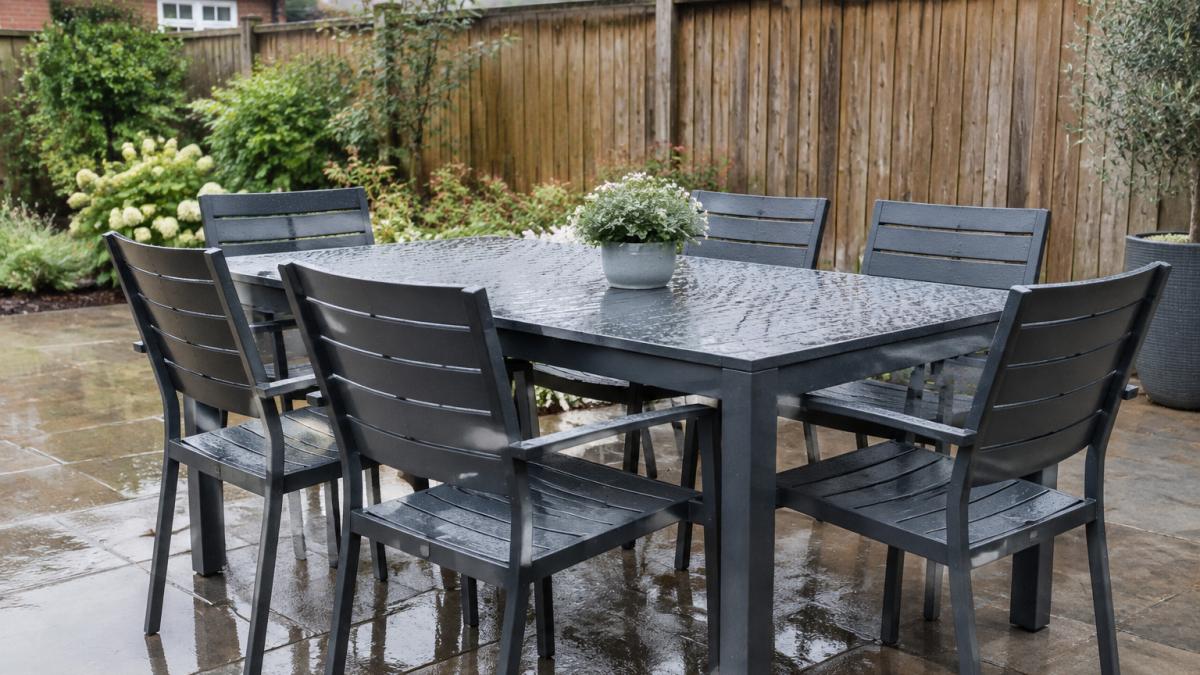
Infographic comparing weather resistance of various garden furniture materials on a damp patio
Material
Rain and damp
Frost and freeze-thaw
Wind and weight
Typical lifespan
Maintenance
Powder-coated aluminium
Very good; does not rust like steel
Good; frame does not absorb water
Light, so needs anchoring in exposed spots
10-15 years with care
Occasional wash; check coating at joints
Synthetic rattan on aluminium frame
Good; weave sheds water
Good if frame is aluminium, not steel
Moderate; weave can crack if brittle
7-12 years
Wash weave; store cushions
Hardwood (teak, acacia, eucalyptus)
Good if oiled; absorbs water if bare
Fair; wet timber that freezes can split
Heavy and stable
10-20 years with annual care
Oil or seal annually
Softwood (pine, spruce)
Poor if untreated
Poor; swelling and cracking common
Moderate
3-7 years untreated
Regular treatment essential
Composite (e.g. travertine-style moulded tops)
Very good; non-absorbent
Very good; no water uptake
Heavy, stable
10+ years
Wipe clean; no sealing
Aluminium Frames and Rust Resistance
Aluminium does not rust in the way steel does, which makes it a sensible choice for a damp garden. Powder-coated finishes add a further layer of protection against moisture and scratches. Check that the coating covers all joints, since these are where corrosion usually starts. A common pattern is for cheap frames to use steel inserts or fasteners at joints, which can rust even when the visible frame is aluminium, so ask what the fixings are made from. Aluminium is light, which helps when moving furniture but makes it more prone to blowing over in exposed gardens; look for feet that accept anchors or weights.
Rattan and Synthetic Rattan Furniture
Synthetic rattan, usually woven over an aluminium or steel frame, copes well with rain and sun. Natural rattan is far less suited to winters here and will degrade quickly if left out. Look for UV-stabilised weave so the colour holds up through summer, and check the frame material, a steel frame under a weatherproof weave is the weak point. Weave can become brittle after several seasons of UV exposure, so inspect for cracking at stress points such as armrests and chair backs.
Wooden Garden Furniture and Protection
Timber looks lovely but needs regular care. Untreated wood absorbs water, swells, then cracks as it dries. Hardwoods hold up better than softwoods, but any timber benefits from an annual oil or sealant. Freeze-thaw cycles are the real test: water trapped in grain expands when it freezes and can split the timber, so raise furniture off wet ground and ensure water cannot pool on seats or tops. The Happy Cocooning side tables are moulded from a weather-resistant composite with a travertine-style finish, and the listing describes them as needing minimal maintenance.
What This Means for Total Cost of Ownership
Purchase price is only part of the story. A cheap softwood set may cost less upfront but need replacing within a few years, while a powder-coated aluminium or composite piece typically lasts a decade or more with minimal care. When comparing, factor in the cost of oil, sealant, replacement cushions and covers over the expected life. Repairability matters too: woven seats and cushions can often be replaced separately, whereas a failed welded frame usually means a new piece. Mid-range aluminium or composite furniture is often a practical choice for exposed gardens, while timber suits sheltered spots where the owner is happy to maintain it.
Watch out: "all-weather" or "weatherproof" claims on budget timber or rattan often mean the item can survive a shower, not a winter, always check the frame material and fixings, not just the outer finish.
All-Weather Garden Furniture: What the Label Really Means
"All-weather" is a marketing term, not a standard. It usually means a product is designed to stay outside year-round, but it does not mean it is maintenance-free. Read the materials list and care instructions rather than relying on the label alone.
Our cushion covers, for example, are made from water-resistant polyester and are described as suitable for indoor and outdoor use. Water-resistant is not waterproof, though. Heavy, prolonged rain will still soak through, so bring cushions in during extended wet spells.
Wooden Garden Furniture Care Through Damp and Frost
If you already own timber furniture, damp and frost are the main threats. Clean it in spring, let it dry fully, then apply a suitable outdoor oil. Avoid leaving water to pool on seats or tabletops, and keep furniture off wet grass where possible. Wood that has frozen while wet is more likely to split, so prioritise good drainage and airflow underneath.
Garden Furniture Covers and Seasonal Storage
Covers can help protect furniture from rain and UV, but only if they breathe. A cover trapped against wet timber can encourage mould. Lift covers occasionally, and allow any cushions and fabrics to air dry completely before storing them.
For seasonal storage, a dry shed or garage is best. Store cushion covers flat in a sealed bag once they are fully dry, and keep rugs rolled rather than folded to avoid creasing.
Our Nature Outdoor Rugs are made from 90% polypropylene and 10% polyester on a polypropylene backing, and they are water-resistant and UV-protected. At £39.90 each, they are an option for adding warmth to a patio.
Choosing Your Garden Set for a Small Space or Year-Round Use
Small gardens, balconies and courtyards need furniture that is compact, stable and easy to store, and the same pieces must cope with wind and winter exposure. Rather than treating the climate as one condition, match the set to your space and the weather it will actually face.
Stability and Wind Safety
Light furniture on an exposed balcony or patio can move in strong gusts. Weight, shape and anchoring all matter. Heavier composite or timber pieces are less likely to shift, while aluminium and rattan sets benefit from stackable or nesting designs that can be grouped and weighted when not in use. Where possible, choose furniture with feet that accept anchors or that can be tied down, and avoid tall, narrow pieces that catch the wind. Cushions should be brought in or stored in a breathable box during windy and wet spells, both to protect them and to stop them acting as sails.
Compact and Stackable Options
For limited space, look for nesting tables, folding chairs and modular seating that can be reconfigured. A round side table measuring 45cm across and 45cm high, such as the Happy Cocooning Round Side Table Travertine at £120.00 (11kg), fits beside a seat without crowding the space. The Happy Cocooning Rib Side Table offers the same dimensions with a more sculptural base, also at £120.00. Both are moulded from a weather-resistant composite and are built to sit outside year-round with minimal maintenance. For seating, the Opus Grey Woven Rope Chair with Cushion at £356.95 features a handwoven element and a foam-padded grey cushion.
Storage Constraints
If you have no shed or garage, choose pieces that can be stacked, folded or nested, and invest in breathable covers rather than sealed plastic. Cushion covers such as the OLIVIA ROCCO Cushion Covers 43x43 cm (Milano) at £8.00 are made from water-resistant polyester. Our Nature Outdoor Rugs, made from 90% polypropylene and 10% polyester on a polypropylene backing, are water-resistant and UV-protected at £39.90 each; roll them rather than folding to avoid creasing, and store them dry.
A Practical Buying Checklist
Before buying, check the following measurable details:
Frame material and fixings: aluminium frame with stainless or coated fixings resists rust better than steel inserts.
Coating coverage: powder coating should cover joints and welds, not just flat surfaces.
Fabric specification: water-resistant is not waterproof; check whether cushions have removable, washable covers.
Drainage: seats and tops should shed water rather than pooling it.
Weight and anchoring: heavier pieces are more stable in wind; lighter pieces need tie-downs or storage.
Warranty terms: a longer frame warranty usually signals better construction, but check what it excludes.
Repairability: can cushions, weave or feet be replaced separately?
Before buying, measure your space, check the material against your exposure and read the care instructions. Choosing well now means fewer replacements later.
Frequently Asked Questions
What is the best material for garden furniture in the UK climate?
For most UK gardens, powder-coated aluminium and synthetic rattan (HDPE or PE rattan) perform best outdoors because they resist rain, damp and frost without rusting or rotting. Solid hardwood can last for years if it is oiled or treated regularly, while untreated softwood is the weakest choice for year-round exposure. Aluminium is lightweight and easy to move, which helps when you need to shelter furniture during the worst weather. Check that cushions use weather-resistant outdoor fabric, since cushions are usually the first part to fade or absorb moisture.
What garden furniture can be left outside all year?
Furniture made from powder-coated aluminium, synthetic rattan and treated or naturally durable hardwood can generally stay outside through the UK winter, provided it is kept clean and the joints are checked each season. Cushions are the exception: store them indoors or in a dry box, because prolonged damp can cause mould and fabric deterioration. A protective cover helps keep rain, leaf litter and frost off the surfaces between uses. Furniture with exposed steel or untreated timber should be stored in a shed or garage over winter.
Does aluminium garden furniture rust?
Aluminium does not rust in the way steel does, because it forms a thin protective oxide layer when exposed to air. Powder-coated finishes add further protection against corrosion and scratches. Rust can still appear if the coating is chipped and the bare metal is exposed to salt air near the coast, so touch up any damage promptly. Wiping the frame down a few times a year with mild soapy water keeps the finish in good condition.
How do you protect wooden garden furniture from rain?
Wooden garden furniture lasts longer when you oil or seal it at least once a year, ideally in spring, and let it dry fully before use. Keep it under a cover or undercover where possible, and avoid letting water pool on horizontal surfaces such as seats and tabletops. Raising the furniture slightly off wet ground with feet or pads reduces rot and staining. Brush away leaves and moss regularly, as they hold moisture against the timber.