Luxury Hot Tubs for Home Garden: What Actually Matters Before You Buy
A luxury hot tub is a large, permanently installed spa with a hard acrylic shell, multiple hydrotherapy jets and integrated heating, designed for year-round outdoor use.
Most buyers start with the brochure, the wrong end of the process.
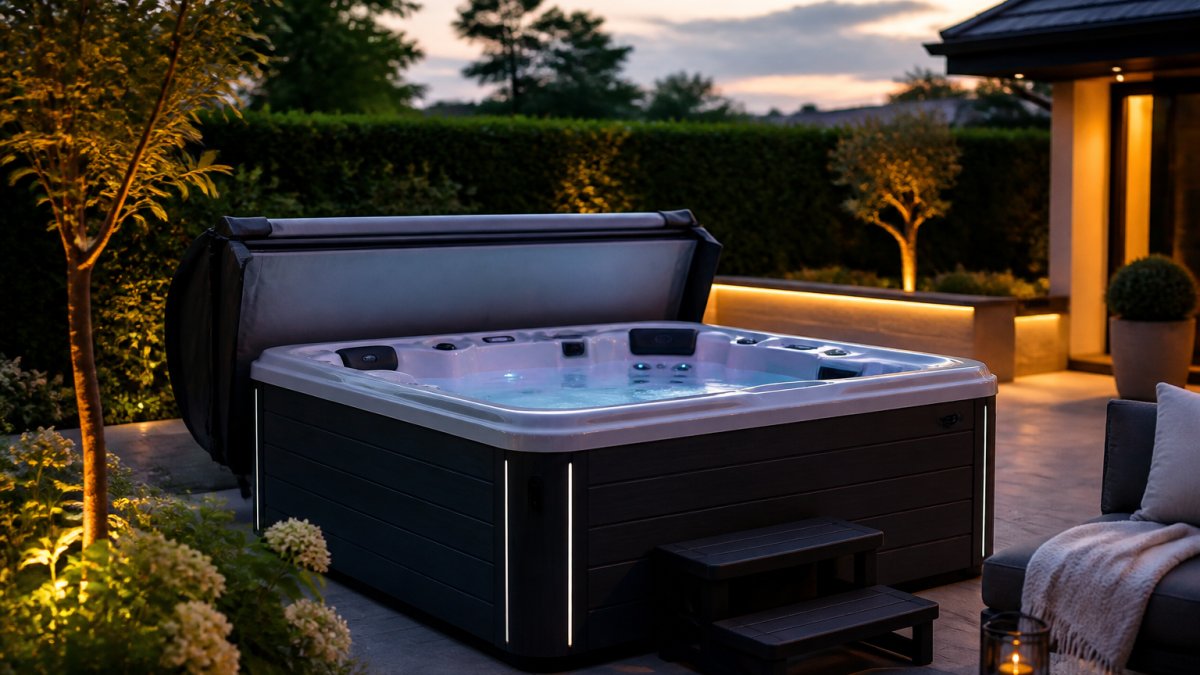
Modern luxury hot tubs glowing on a landscaped garden patio at dusk
Hard Shell vs Inflatable: Which Lasts in British Weather
Hard shell models win on lifespan, insulation and comfort. An inflatable spa is cheaper and easier to move, but its vinyl walls and basic insulation suit occasional summer use, not permanent installation.
To leave a spa out all year, choose a hard shell: the acrylic resists frost and UV damage, and the cabinet hides insulation around the pipework.
A common mistake is buying an inflatable for year-round use, then finding running costs and repairs add up quickly. Buy inflatable for flexibility, hard shell for longevity.
Hot Tub Installation Requirements UK: Base, Power and Access
Most hot tub installation requirements UK buyers hit come down to three things: a level base, a suitable power supply and a clear access route. Plan all three before delivery day, because retrofitting them afterwards is far more disruptive and expensive.
Foundation and Structural Requirements Most Buyers Overlook
A hot tub is heavy in a way that surprises people.
The base must be flat, solid and able to carry that load without settling. Three options are common:
Reinforced concrete slab. The benchmark solution. A slab of around 100 mm, laid on a compacted sub-base and reinforced with mesh, spreads the load and will not move. Allow a curing period before placing the spa.
Paving on a prepared sub-base. Suitable if laid on a properly compacted, bound sub-base rather than sand or loose grit. Slabs can settle unevenly, so check levels after the first winter.
Timber decking. Only viable if designed for the point load; a standard domestic deck built for foot traffic is not adequate. A qualified tradesperson should assess joist spans, post spacing and footings, and may recommend extra supports beneath the spa footprint.
Whichever base you choose, it must be level to within a few millimetres across the full footprint. An uneven base stresses the shell, can twist the cabinet, and is a common reason warranties are refused.
Leave a small gap or drainage channel so water from the cover and splashes does not pool under the base. Standing water accelerates rot in timber and frost damage in paving.
Power Supply and Electrical Load
Smaller plug-and-play models run from a standard outdoor socket protected by a residual current device (RCD).
As a rule of thumb, a plug-and-play spa draws around 13 amps, while a hardwired model with multiple pumps and a high-output heater can need a dedicated circuit rated at 32 amps or more.
Practical points that catch buyers out:
The supply must be protected by an RCD, and the circuit should be dedicated to the spa rather than shared with garden lighting or a shed.
Cable sizing depends on run length from the consumer unit; a long run needs thicker cable to avoid voltage drop, which your electrician will calculate.
An isolator switch must be positioned within sight of the spa but at least a safe distance from the water, so the unit can be shut off without reaching over the water.
Any outdoor socket or enclosure needs a suitable IP rating for the location.
Outdoor electrical work is not a DIY job. The electrical safety guidance from the Health and Safety Executive is a sensible starting point, and in practice you should use an electrician registered with a competent person scheme so the work is certified.
Access and Delivery Route
Access is the step buyers forget until the day. Measure every gate, path, corner and doorway between where the delivery vehicle will park and the final position. A spa that will not fit through the side gate cannot be delivered, and craning it over a house is expensive and sometimes impossible.
Measure the narrowest point of the route, not the widest. The spa travels on a trolley or skid, which adds to its effective width, and it cannot be tipped far without risking damage to the shell or cabinet.
Watch OutSkipping base preparation is the single most expensive shortcut. An uneven base can stress the shell and void your warranty, and correcting it later means draining and moving a filled spa. Confirm the base, the power supply and the access route before you order, not after.
Pro TipAsk the supplier for the dry weight, the filled weight and the packaged dimensions in writing. Those three figures tell you whether your base, your electrics and your gate are up to the job.
Hot Tub Running Costs UK: What You'll Actually Pay Each Month
Running costs depend on insulation quality, water volume, how often you use it and the temperature you hold. A well-insulated hard shell with a fitted cover costs far less to run than a basic model left uncovered.
The biggest variable is heat loss. A quality spa cover, full foam insulation and a thermal lock between the water and the cabinet all reduce how hard the heater works. Setting the temperature a few degrees lower when the spa is not in use makes a noticeable difference over a season.
Standby heating. Keeping the water at temperature around the clock. This is the dominant cost for most owners and the one insulation most affects.
Heating on demand. Raising the temperature after a period at a lower setting, or after a water change.
Pumps, blowers and lighting. Small individually, but they add up if the jets run for long periods.
A well-insulated spa with a fitted cover holds its temperature with modest standby heating, while a poorly insulated or uncovered spa can lose heat fast enough that the heater runs almost continuously in cold weather.
Because electricity unit rates change, work from your own tariff: take the spa's rated power draw in kilowatts, estimate the hours per day the heater and pumps run, and multiply by your unit rate. A supplier who cannot give a realistic daily consumption figure for a specific model is one to be cautious about.
Long-Term Cost of Ownership: A Simple Calculator Approach
Add up four things: purchase price, installation, monthly energy use and annual maintenance. Divide the total by the years you expect to keep the spa. That figure, not the sticker price, is the real cost.
Cost component
What to include
How to reduce it
Purchase
Spa, cover, steps, starter chemicals
Buy a well-insulated model once
Installation
Base, electrician, delivery access
Prepare the base before delivery
Energy
Heating, pumps, lighting
Fit a quality cover, lower standby temperature
Maintenance
Filters, water care, servicing
Follow a seasonal schedule
Work through the maintenance line properly, because it is the one buyers underestimate most:
Sanitiser. Chlorine or bromine is consumed continuously and faster with heavy use; a household using the spa several times a week gets through it quicker than an occasional user.
pH and alkalinity adjusters. Small quantities, but a recurring purchase that matters for water comfort and equipment life.
Filters. Most cartridges are cleaned monthly and replaced once or twice a year depending on use, a predictable annual cost.
Shock treatment and clarifiers. Used after heavy use or when the water is refreshed.
Servicing. An annual service by a qualified technician keeps the heater, pumps and seals in order and catches problems before they become repairs.
Water changes. Draining and refilling periodically uses water and a fresh dose of chemicals.
Add those together for a realistic annual maintenance figure rather than a vague "it depends", then add your estimated energy cost. The total, divided by the years you expect to keep the spa, gives a true annual cost of ownership.
Pro TipAsk for the spa's insulation details and cover specification before buying. These two items affect running costs more than any other feature, and they are rarely the headline in a product listing. A thicker cover with a good seal and full foam insulation will pay for themselves over the life of the spa.
Key TakeawayRun the numbers before you buy, not after. A slightly higher purchase price for a well-insulated spa with a quality cover is usually the cheaper decision over five to ten years.
Hydrotherapy, Seating Capacity and Choosing the Right Size
Seating capacity should match how you actually use the spa. A two-person household rarely needs seven seats, and a family of five will regret a three-seater.
Hydrotherapy is the reason many buyers choose a hot tub at all. Water jets and massage therapy target back, shoulder and leg tension, and lounger seats let you recline fully.
A mix of upright seats and one lounger suits most households, and ambient lighting plus a built-in step make evening use easier.
Hot Tub Maintenance Tips for Beginners: Water Care and Seasonal Schedules
Hot tub maintenance tips for beginners start with three habits: test the water regularly, clean or replace filters on schedule, and keep the cover on when the spa is not in use.
A typical routine includes checking sanitiser and pH levels, running the circulation pump, and cleaning the filter. An ozone generator reduces sanitiser needs, and some owners prefer chlorine-free systems for gentler water.
Key TakeawayA simple calendar beats a complicated routine. Test weekly, clean filters monthly, service seasonally, and the spa stays easy to live with.
Financing, Warranty and Delivery: What to Confirm Before Ordering
Confirm four things before you pay: what the warranty covers, whether finance is available, how delivery works, and who handles the heavy lifting.
Warranty coverage varies. Check what is protected (shell, cabinet, heater, pumps), for how long, and whether labour is included. Financing spreads the cost, but read the terms carefully.
Delivery matters more than buyers expect. A filled spa weighs hundreds of kilograms, so ask whether delivery includes positioning and whether the route has been checked.
Conclusion: Making the Right Choice for Your Garden
The hardest part is not choosing a spa. It is getting the base, power and access right before it arrives, because those three decide whether installation is simple or stressful.
At Home and Garden Store UK, we make that easier with carefully selected products from trusted brands, friendly expert support and tracked delivery, backed by hassle-free returns. Get started with Home and Garden Store UK and create an outdoor retreat you will use all year.
Frequently Asked Questions
What should I look for when buying a luxury hot tub for my garden?
Focus on shell material, insulation quality, seating capacity and jet configuration. Acrylic shells with full foam insulation hold heat better and suit British weather. Check the warranty covers the shell and heater, not just parts. Confirm the dimensions fit your garden and that access allows delivery.
Do I need planning permission for a hot tub in my garden?
Most garden hot tubs fall under permitted development, so planning permission is rarely needed. However, if you're in a listed building, conservation area or the tub sits on a raised deck above certain heights, check with your local planning authority. If you're a landlord or run serviced accommodation, separate rules may apply. Always verify before ordering to avoid issues later.
How much does it cost to run a luxury hot tub in the UK?
Running costs depend on insulation, size, temperature setting and how often you use it. A well-insulated hard shell model typically costs less to run than an inflatable spa because it retains heat better. Using a fitted spa cover, reducing temperature when not in use and running the circulation pump on a timer all lower bills. Check your energy tariff and calculate monthly usage based on your tub's kWh rating.
How often should I change the water in my garden hot tub?
Most manufacturers recommend a full water change every three to four months for regular use. Heavy use, poor water chemistry or visible cloudiness means changing sooner. Between changes, test pH, alkalinity and sanitiser levels two to three times weekly. Clean filters monthly and use an ozone generator or chlorine-free system if you prefer fewer chemicals. Always follow your tub's specific maintenance schedule.